
Double Kitchen Sink Drain with AAV (Cheater Vent) Installation

Updated: Jun 20
🔧 Products Used In This Video
As an Amazon Affiliate I reciece commision on purchases
If your kitchen sink drains slowly, gurgles, or wasn't originally built with proper venting, installing an Air Admittance Valve (AAV), commonly known as a cheater vent, can solve the problem. In this project, I'll show how I installed a double kitchen sink drain assembly using ABS pipe, a cleanout, a union P-trap, and an approved Air Admittance Valve.
Why Use a Double Kitchen Sink Drain with AAV?
A kitchen sink drain needs a source of air behind the flowing water. Without a proper vent or an approved air admittance valve (AAV), the drain system can create negative pressure as water moves through the pipes.
When this happens, you may notice several common symptoms:
Gurgling Sounds
One of the first signs of a missing or inadequate vent is a gurgling sink. As water drains, the plumbing system tries to pull air through the nearest available opening, often causing bubbling and gurgling noises from the sink drain.
Slow Draining Water
Without proper venting, water cannot flow smoothly through the drain line. The lack of air behind the water can create a vacuum effect that slows drainage and makes the sink empty more slowly than normal.
Trap Siphoning
A more serious problem occurs when the vacuum becomes strong enough to pull water out of the P-trap. The water in the trap acts as a seal that prevents sewer gases from entering the home. If the trap is siphoned dry, unpleasant sewer odors can enter the kitchen.
Recurring Drainage Problems
Many homeowners assume a slow or noisy sink is caused by a clog, but poor venting can create symptoms that look very similar. A sink may continue to gurgle or drain poorly even after the drain has been cleaned.
Increased Risk of Sewer Gas Odors
If the trap seal is compromised due to siphoning, sewer gases can enter the home. These odors are often strongest under the sink or near the drain opening.
For these reasons, every kitchen sink should have an approved method of venting, whether it is connected to a traditional roof vent or uses a properly installed air admittance valve (AAV) where permitted by local plumbing code.
WHY SOME KITCHEN SINKS NEED A CHEATER VENT
Many older homes were built without proper venting for the kitchen sink. Without a vent, water flowing through the drain can create negative pressure and siphon water from the P-trap. This often causes slow drainage, gurgling noises, and sewer gas odors.
An Air Admittance Valve allows air into the drainage system when needed, helping the sink drain properly while protecting the trap seal.
Always use a code-approved Air Admittance Valve rather than inexpensive knockoff versions that may fail prematurely.
PLANNING THE DRAIN ASSEMBLY
Before gluing any fittings together, I like to dry-fit the entire assembly.
This installation included:
• Double sink drain outlets
• Trap adapters
• Dishwasher wye fitting
• Union P-trap
• Cleanout fitting
• Air Admittance Valve connection
During editing I noticed that the dishwasher wye had been installed backwards. The branch should point in the direction of flow toward the sanitary tee. Correct orientation helps maintain smooth drainage and prevents unnecessary turbulence.
INSTALLING THE HORIZONTAL DRAIN

After installing the trap adapters, I measured and cut the horizontal drain section that connects both sink bowls together.
One trick I like to use is assembling the drain upside down on the cabinet floor before gluing. This makes it much easier to keep everything straight and level without constantly checking with a level.
Using the cabinet floor as a reference helps ensure the trap adapters line up perfectly.
CONNECTING TO THE EXISTING DRAIN
The drain pipe in this installation comes up through the floor.
Before adding a P-trap, it's important to verify whether a trap already exists below the floor. If there is already a trap below, installing another trap under the sink would create a double-trap condition, which can cause drainage issues.
In this case, there was no trap below the floor, allowing a standard under-sink P-trap installation.
ADDING A CLEANOUT

Whenever possible, I like to include a cleanout fitting.
This particular sink has a crawlspace below it. Accessing a clog from underneath in the future would be inconvenient, so installing a cleanout under the sink makes future maintenance much easier.
Many plumbers skip installing a cleanout under a kitchen sink because it takes extra time and space. However, a properly placed cleanout can make future maintenance much easier. Instead of removing traps or disassembling piping, a drain cleaning cable can often be inserted directly through the cleanout opening.
A cleanout provides:
• Easier drain cleaning
• Faster maintenance
• Better accessibility
• Improved serviceability
In many jurisdictions, cleanouts are also required by code.
INSTALLING THE SANITARY TEE AND AAV
Above the cleanout, I installed a sanitary tee.
The side of the tee receives discharge from the P-trap, while the top of the tee is used for the Air Admittance Valve.
The vertical section between the trap and the tee is important because it allows the vent to protect the trap from siphoning.
A common guideline is maintaining at least two pipe diameters between the trap and the vent connection. Since this installation uses 1½-inch pipe, I wanted approximately 3 inches of pipe between the trap and the sanitary tee.
WHY THE AIR ADMITTANCE VALVE SHOULD BE HIGH

I always install Air Admittance Valves as high as possible inside the sink cabinet.
If the drain ever backs up, debris can collect around the valve. Installing it higher helps keep it cleaner and reduces the chance of future problems.
Most manufacturers specify a minimum vertical section of pipe beneath the valve. Always follow the manufacturer's installation instructions.
INSTALLING THE UNION P-TRAP

I prefer union-style P-traps because they are easy to service and remove if needed.
Although some plumbers don't like them, I've had excellent results with union traps throughout my career.
The trap nut should usually be tightened by hand. If additional tightening is needed, a pair of channel locks can be used carefully to snug the connection.
Avoid overtightening, which can damage washers and create leaks.
FINAL ASSEMBLY
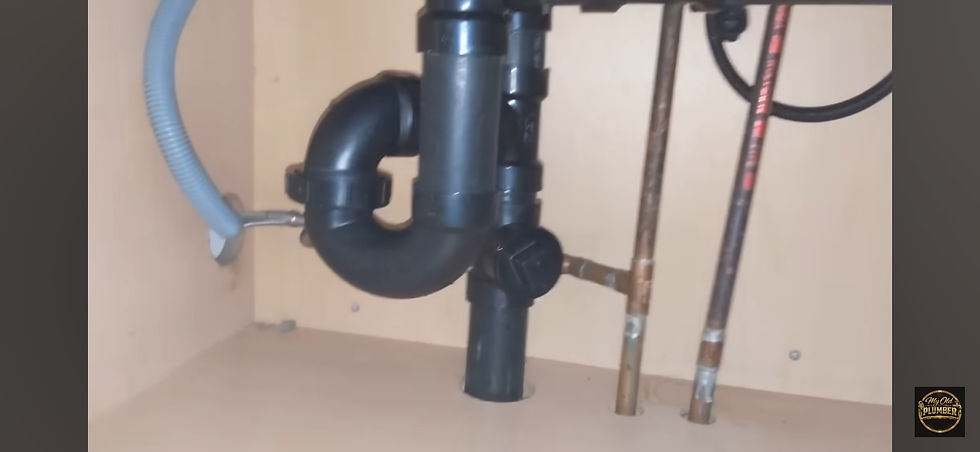
Once all fittings were glued and aligned, the final steps included:
• Installing the P-trap
• Tightening all slip-joint connections
• Installing the Air Admittance Valve
• Testing the sink for leaks
• Verifying smooth drainage
The finished installation provides proper venting, easy future maintenance, and reliable drainage performance.
CONCLUSION
Installing a double kitchen sink drain with an Air Admittance Valve is an excellent solution when a traditional vent is not available. By including a cleanout, maintaining proper trap-to-vent distance, and installing the AAV as high as possible, you can create a drainage system that performs reliably for years.
FREQUENTLY ASKED QUESTIONS
Is a Cheater Vent Legal?
Cheater vents are legal in most jurisdictions, however always make sure to check your local building code before installing an AAV
What is a cheater vent?
A cheater vent is another name for an Air Admittance Valve (AAV). It allows air into the drain system without requiring a vent through the roof.
Why does my kitchen sink gurgle?
Gurgling is usually caused by inadequate venting, a partial blockage, or a failing Air Admittance Valve.
Can I install two P-traps on a kitchen sink?
No. Double trapping can create drainage problems and is prohibited by plumbing codes in many areas.
How high should an Air Admittance Valve be installed?
As high as practical inside the sink cabinet while following the manufacturer's instructions and local plumbing code requirements.
Do I need a cleanout under my sink?
A cleanout is highly recommended because it makes future drain cleaning and maintenance much easier.
🔧 Products Used In This Video
As an Amazon Affiliate I reciece commision on purchases


Comments