
Silicone vs. Plumber's Putty for Kitchen Sink Drains: Which One Should You Use?

Tools Used In This Video
As an Amazon Associate, I earn from qualifying purchases.
If you've ever installed a kitchen sink basket strainer, you've probably heard the debate: silicone vs plumber's putty?
As a plumber, I've used both. Recently, I decided to put them side-by-side on the same sink and compare not only the installation process but also what happens when you need to remove them later. The results were interesting.
In this test, I installed one basket strainer using plumber's putty and another using 100% silicone to see which sealed better and which was easier to remove later.
Why This Comparison Matters
The debate usually starts when homeowners or plumbers need to install a new basket strainer.
Both products can create a watertight seal, but they behave very differently when it's time for repairs, replacement, or maintenance.
One of the biggest arguments in favor of plumber's putty is how easy it is to remove years later. Supporters of silicone argue that it creates a superior seal and lasts longer.
To find out how much truth there is to both arguments, I removed an existing basket strainer that had been installed with silicone and then installed one side using plumber's putty and the other using silicone.
Removing a Silicone-Sealed Basket Strainer

One of the first things I noticed was how difficult it was to remove the basket strainer that had been installed with silicone.
Even after loosening the drain assembly, the silicone continued holding the basket strainer tightly to the stainless steel sink.
While trying to pry it loose, I actually dented the basket strainer itself.
Eventually, I had to push the strainer out from underneath the sink. If you have an undermount sink, this is where you need to be careful. Applying too much force could potentially damage the sink installation or surrounding materials.
The silicone did its job extremely well—but that's also what makes removal more difficult.
Cleaning Up Old Silicone
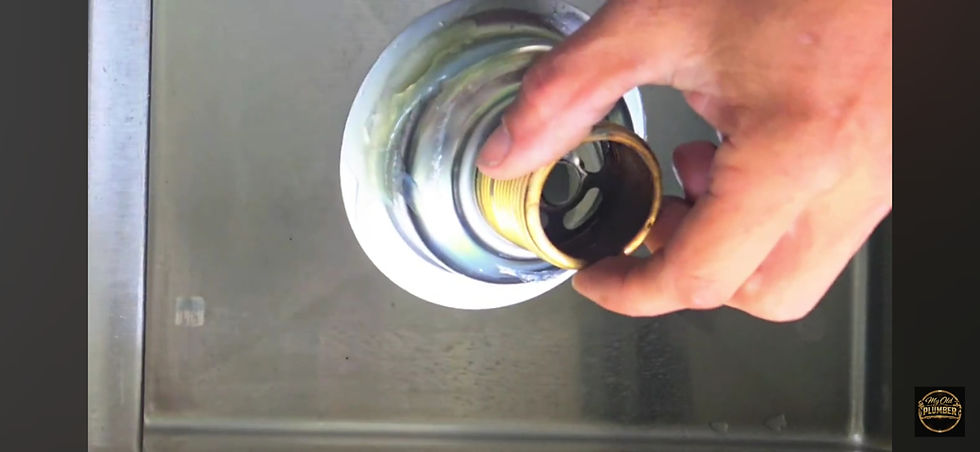
Removing the basket strainer was only part of the battle.
The leftover silicone stuck aggressively to both the sink and the basket strainer. I ended up using a snapped-off Olfa blade to scrape away the remaining material.
The large pieces came off reasonably well, but the smaller pieces took much longer to remove.
In my experience, this is one of the biggest disadvantages of silicone. The cleanup process can be frustrating and time-consuming.
If you're planning to reuse the basket strainer, expect to spend some time cleaning it thoroughly.
Installing a Basket Strainer with Plumber's Putty

For the plumber's putty side, I rolled the material into a small rope and created a gasket around the underside of the basket strainer flange.
The goal is to eliminate any air pockets and create a continuous seal around the entire perimeter.
When you lower the basket strainer into the sink opening, it should sit slightly proud of the sink surface before tightening.
As the locking nut is tightened from underneath, the putty compresses evenly around the entire flange.
A properly installed basket strainer will squeeze putty out 360 degrees around the opening.
Once tightened, simply remove the excess putty and inspect underneath to confirm you have a complete seal.
Important Warning About Sink Materials

Standard plumber's putty works perfectly on most stainless steel sinks.
However, if you're working with a granite composite or solid-surface sink, you need to be careful.
Many manufacturers recommend against traditional plumber's putty because the oils can potentially stain certain sink materials.
Always check the sink manufacturer's recommendations before installation.
In those situations, silicone is often the preferred choice.
Installing a Basket Strainer with Silicone
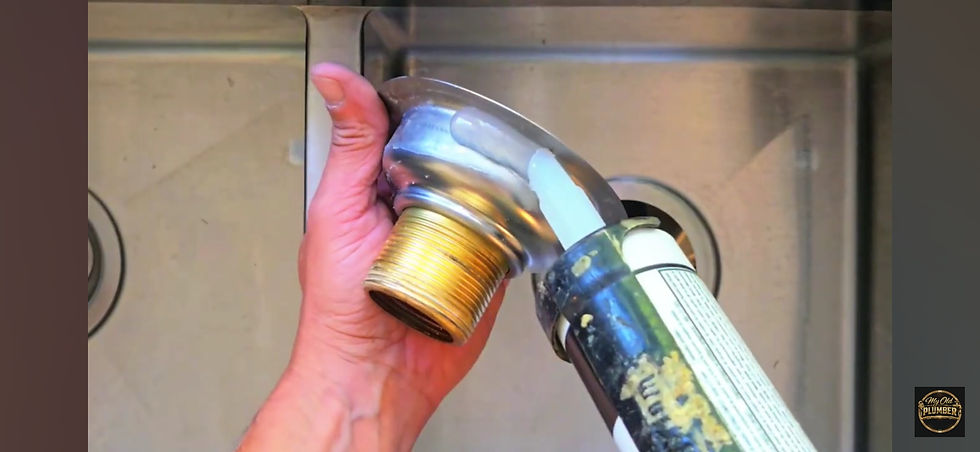
For the silicone side, I used 100% silicone.
It's important to use actual silicone—not a water-soluble kitchen and bath caulk marketed as a general-purpose sealant.
I applied a bead around the underside of the basket strainer flange and lowered it into place.
One thing many people don't realize is that excess silicone can stain stainless steel if it isn't cleaned up properly.
I've seen stainless steel sinks permanently marked because too much silicone was used and not removed quickly enough.
After tightening the assembly from underneath, I cleaned away the excess silicone and inspected the seal.
Which One Is Better Silicone vs Plumber's Putty
The answer depends on the application.
Use Plumber's Putty If:
You have a stainless steel sink.
Future serviceability is important.
You want easier cleanup.
The sink manufacturer allows it.
Use Silicone If:
The sink manufacturer recommends it.
You're working with granite composite or specialty sink materials.
You want a durable flexible seal.
You don't mind additional cleanup if removal is ever required.
My Opinion as a Plumber
For a standard stainless steel kitchen sink, I still prefer plumber's putty.
It creates an excellent seal, is easy to work with, and makes future repairs much simpler.
That said, silicone absolutely works. In fact, the removal process demonstrated just how strong a silicone seal can be.
The trade-off is that you'll likely spend much more time removing and cleaning it when the basket strainer eventually needs replacement.
Neither product is universally right or wrong. The best choice depends on the sink material, manufacturer recommendations, and your priorities for future maintenance.
Frequently Asked Questions
Is silicone stronger than plumber's putty?
Yes. Silicone adheres much more aggressively to surfaces than plumber's putty, which is why removal is typically more difficult.
Can plumber's putty be used on stainless steel sinks?
Yes. Plumber's putty is commonly used on stainless steel kitchen sinks and works very well.
Can plumber's putty stain sinks?
It can stain some natural stone, granite composite, and specialty sink materials. Always check the manufacturer's recommendations.
Why is silicone harder to remove?
Silicone bonds tightly to both the sink and the basket strainer. Even after the drain assembly is loosened, the silicone often continues holding the parts together.
Which is easier to clean up?
Plumber's putty is significantly easier to clean up during installation and removal.
Should I use silicone or plumber's putty on a stainless steel sink?
For most stainless steel sinks, plumber's putty is the preferred option because it's easier to work with and much easier to remove during future repairs. However, always check the sink manufacturer's recommendations.
Tools Used In This Video
As an Amazon Associate, I earn from qualifying purchases.


Comments