
Why Does My Toilet Refill Every 10 Minutes? The 3 Most Common Causes

If your toilet randomly turns on and refills every few minutes, you're experiencing what's commonly called a phantom flush. This is one of the most common toilet problems homeowners encounter, and fortunately, it's usually easy to fix.
Most of the time, the problem comes down to one of three components inside the toilet tank. As water slowly escapes from the tank, the fill valve automatically turns on to replace it. This cycle repeats over and over, causing the toilet to refill every few minutes.
In this guide, I'll explain the three most common causes and show you how to diagnose each one.
Products Used In This Video
As an Amazon Associate, I earn from qualifying purchases.
What Is a Phantom Flush?
Many homeowners are surprised to hear their toilet suddenly refill even though nobody has used it. This issue is commonly known as a phantom flush.
A phantom flush occurs when water slowly leaks from the toilet tank into the bowl. As the water level in the tank drops, the fill valve senses the loss and automatically turns on to restore the correct water level. Once the tank refills, the cycle starts again.
Although the toilet may only run for a few seconds at a time, the problem can continue all day and night. In many cases, homeowners do not realize how much water is being wasted until they notice an increase in their water bill.
Fortunately, phantom flushing is usually caused by a simple issue inside the tank and can often be repaired without calling a plumber.
Why Does a Toilet Randomly Refill?
A toilet tank is designed to hold water at a specific level. If water leaves the tank without being flushed, the fill valve activates to restore the lost water.
The most common causes are:
A leaking flapper
A chain that is too tight
A faulty or improperly adjusted fill valve
Cause #1 : A Leaking Toilet Flapper

The flapper is the rubber seal located at the bottom of the toilet tank. Its job is to keep water inside the tank until the toilet is flushed.
Over time, flappers can wear out, crack, warp, or become covered with mineral deposits. Some American Standard style flappers are also known for developing bubbles underneath the seal that prevent a proper seal.
Signs of a Bad Flapper
The toilet randomly refills every few minutes
The tank water level slowly drops
You hear water running briefly when nobody has flushed
The problem is more noticeable at night
How to Test the Flapper

One of the easiest ways to confirm a leaking flapper is with food coloring.
Add several drops of food coloring into the toilet tank.
Wait approximately five minutes.
Check the toilet bowl.
If colored water appears in the bowl, the flapper is leaking and should be replaced.
If no colored water appears, the flapper is likely sealing properly.
Because flappers are inexpensive, replacement is often the easiest solution if there is any doubt about its condition.
Cause #2: The Toilet Chain Is Too Tight

A chain that is adjusted too tightly can prevent the flapper from fully closing after a flush.
Even a small gap between the flapper and flush valve seat can allow water to slowly leak into the bowl. As the water level drops, the fill valve activates and refills the tank.
How to Check the Chain
Remove the tank lid and inspect the chain.
The chain should have a small amount of slack when the toilet is not being flushed.
If the chain is tight and pulling upward on the flapper, lengthen it slightly until the flapper can rest completely flat against the flush valve seat.
Flush the toilet several times to confirm proper operation.
Cause #3: The Fill Valve Is Set Too High or Contains Debris
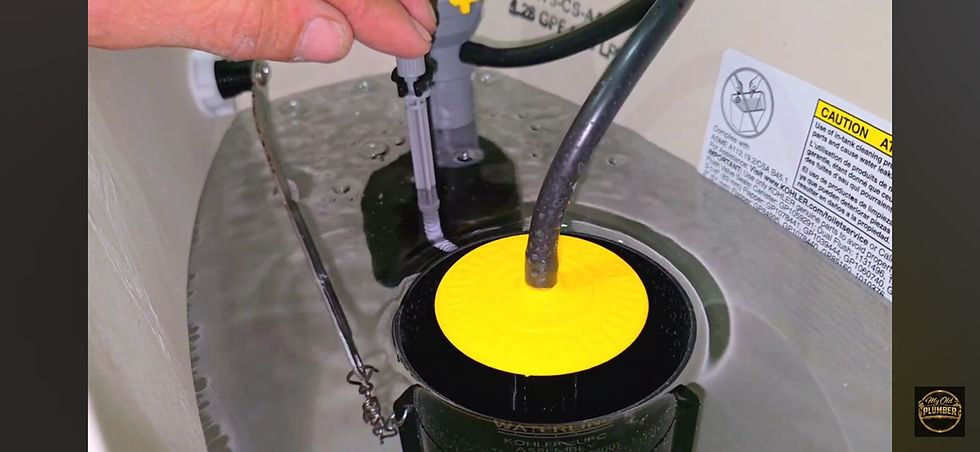
If the flapper and chain look good, the next component to inspect is the fill valve.
The fill valve controls the amount of water entering the tank after a flush.
Water Level Set Too High
If the water level rises too high, water will spill into the overflow tube.
When this happens, water continuously enters the toilet bowl. As the tank loses water, the fill valve activates again, creating a cycle of intermittent refilling.
The water level should sit approximately one inch below the top of the overflow tube.
If water is running into the overflow tube, lower the fill valve adjustment until the water level sits below the opening.
Debris Inside the Fill Valve

Sediment and debris can become trapped inside the fill valve, especially after water main work or plumbing repairs.
Before inspecting the fill valve, turn off the water supply to the toilet.
To verify the water is off, move the float up and down. No water should enter the tank.
For a Fluidmaster style fill valve:
Lift the arm.
Rotate the cap approximately one-quarter turn.
Remove the cap.
Inspect for debris or sediment.
Clean the valve thoroughly.
Reassemble the valve and restore the water supply.
In many cases, cleaning the fill valve will solve the problem.
How Much Water Can a Phantom Flush Waste?
A toilet that refills every 10 minutes may not seem like a major concern, but even a small leak can waste a surprising amount of water.
When water leaks past the flapper or into the overflow tube, the fill valve must repeatedly replace the lost water. Over the course of a day, this can add up to hundreds of gallons of wasted water.
In addition to increasing your water bill, a continuously leaking toilet places unnecessary wear on internal components such as the fill valve and flapper. The longer the problem is ignored, the more likely additional parts will need replacement.
If you notice your toilet refilling on its own, it is best to diagnose and repair the issue as soon as possible.
Should You Replace the Parts?
If you're not completely sure which component is causing the issue, replacing both the flapper and fill valve is often the quickest solution.
These parts are inexpensive and solve the majority of phantom flushing problems.
Benefits include:
Lower water bills
Reduced water waste
Improved toilet performance
Elimination of random refill cycles
How Much Water Can a Running Toilet Waste?
Many homeowners ignore a toilet that refills occasionally because it seems like a minor annoyance.
However, even a small leak can waste hundreds of gallons of water each month. A leaking flapper or faulty fill valve can significantly increase your water bill over time.
Fixing the problem early can save both water and money.
Final Thoughts
If your toilet refills every 10 minutes, the problem is usually caused by one of three issues:
A leaking flapper
A chain that is too tight
A faulty fill valve or incorrect water level
Start by testing the flapper with food coloring. Next, inspect the chain adjustment and finally check the fill valve and overflow tube.
Most homeowners can complete these repairs in less than 30 minutes using basic tools and inexpensive replacement parts.
Common Mistakes Homeowners Make When Troubleshooting a Running Toilet
One of the biggest mistakes homeowners make is replacing parts without first identifying the source of the leak. While replacing the flapper is often a good first step, it is important to inspect the chain, fill valve, and overflow tube as well.
Another common mistake is setting the water level too high after installing a new fill valve. If the water level rises above the overflow tube, the toilet may continue to refill even though the flapper is sealing properly.
Finally, many homeowners overlook mineral buildup and debris inside the fill valve. Sediment from municipal water systems or recent plumbing work can prevent the valve from operating correctly. A quick cleaning may solve the problem without replacing any parts.
Taking a few minutes to properly diagnose the issue can save both time and money.
Frequently Asked Questions
Why does my toilet refill every few minutes?
A toilet that refills every few minutes is usually losing water from the tank. The most common causes are a leaking flapper, a chain adjustment problem, or a faulty fill valve.
How do I know if my toilet flapper is leaking?
Add food coloring to the tank and wait five minutes. If colored water appears in the bowl, the flapper is leaking.
Can a toilet chain cause a toilet to run?
Yes. A chain that is too tight can hold the flapper slightly open and allow water to leak from the tank into the bowl.
Why is water going down the overflow tube?
The fill valve may be adjusted too high or malfunctioning, causing water to spill into the overflow tube.
Should I replace the flapper or the fill valve first?
Start with the flapper because it is the most common cause and the least expensive repair.
Can I fix a running toilet myself?
Yes. Most toilet running issues can be repaired with basic tools and inexpensive replacement parts.
Products Used In This Video
As an Amazon Associate, I earn from qualifying purchases.
Comments